Looking Earlier Than Early: INTERCEPT’s Vision for Preventing Crohn’s Disease Takes Centre Stage at ESPGHAN 2026
What if the greatest opportunity to change the course of Crohn's disease comes before symptoms even begin?
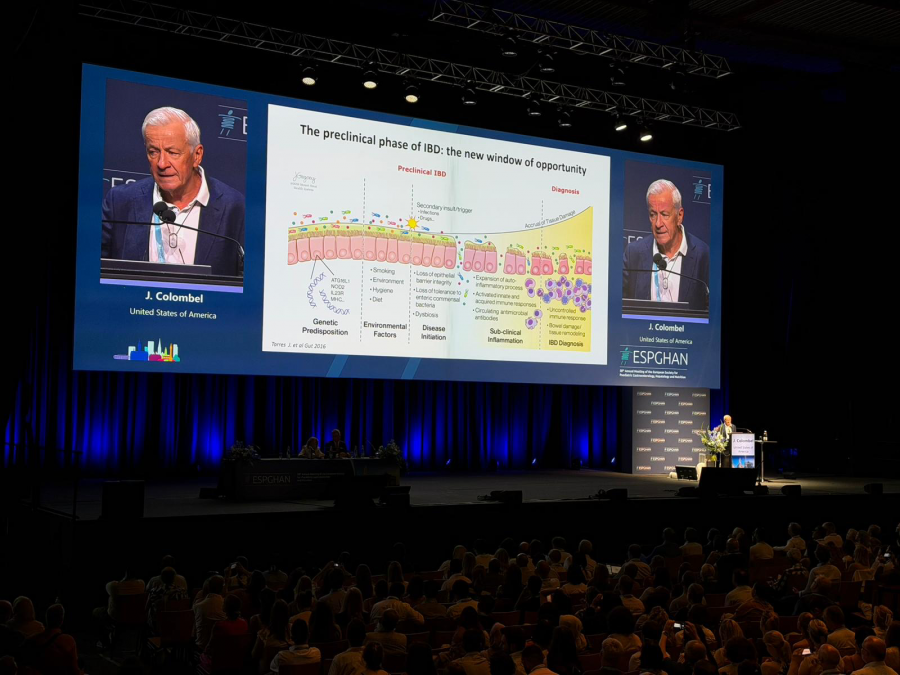
This was the focus of a keynote presentation by Professor Jean-Frederic Colombel, Co-Lead Principal Investigator of INTERCEPT from partner Icahn School of Medicine at Mount Sinai, during the 58th Annual Meeting of the European Society for Paediatric Gastroenterology, Hepatology and Nutrition (ESPGHAN) in Lille, France.
His presentation explored one of the most exciting frontiers in inflammatory bowel disease (IBD) research: the pre-clinical stage. This is the period before Crohn's disease develops, when biological changes are already underway but symptoms have not yet appeared.
For INTERCEPT, this is more than an emerging research area. It is the foundation of the project's vision.
Shifting the Focus from Treatment to Prevention
For decades, Crohn's disease research has concentrated on diagnosing and treating patients once symptoms appear. INTERCEPT is helping to shift that paradigm by asking an even more fundamental question: Can we identify individuals at risk and intervene before disease develops?
By studying the earliest biological, genetic, microbial and environmental changes that occur long before diagnosis, INTERCEPT is working to uncover the mechanisms that drive Crohn's disease and identify opportunities for proactive prevention.
Rather than reacting to disease, the project aims to understand how it begins and ultimately how it might be prevented.
Collaboration Driving Innovation
Scientific meetings such as ESPGHAN provide an invaluable opportunity for partners to share new discoveries, exchange ideas with the international research community and strengthen collaborations that accelerate progress.
Whether presenting keynote lectures, sharing research findings or building new partnerships, INTERCEPT researchers are actively contributing to global efforts to transform the future of Crohn's disease.
A Window of Opportunity
Growing evidence suggests that the pre-clinical phase may represent a critical window during which disease pathways could be identified, and potentially modified, before irreversible damage occurs. Understanding this window is central to INTERCEPT's ambition to move healthcare beyond early diagnosis towards disease prevention.
Prof Colombel highlights “this is especially relevant for the ESPGHAN community which gathers pediatricians dealing with young patients with IBD from all over the world.”
As researchers around the world continue to explore new ways to improve outcomes for people at risk of Crohn's disease, INTERCEPT remains committed to pioneering a future where prevention becomes possible.
Because the best time to treat Crohn's disease may be before it starts.