INTERCEPT Annual Meeting: 2025 A Year of Momentum, Collaboration, and Vision for the Future
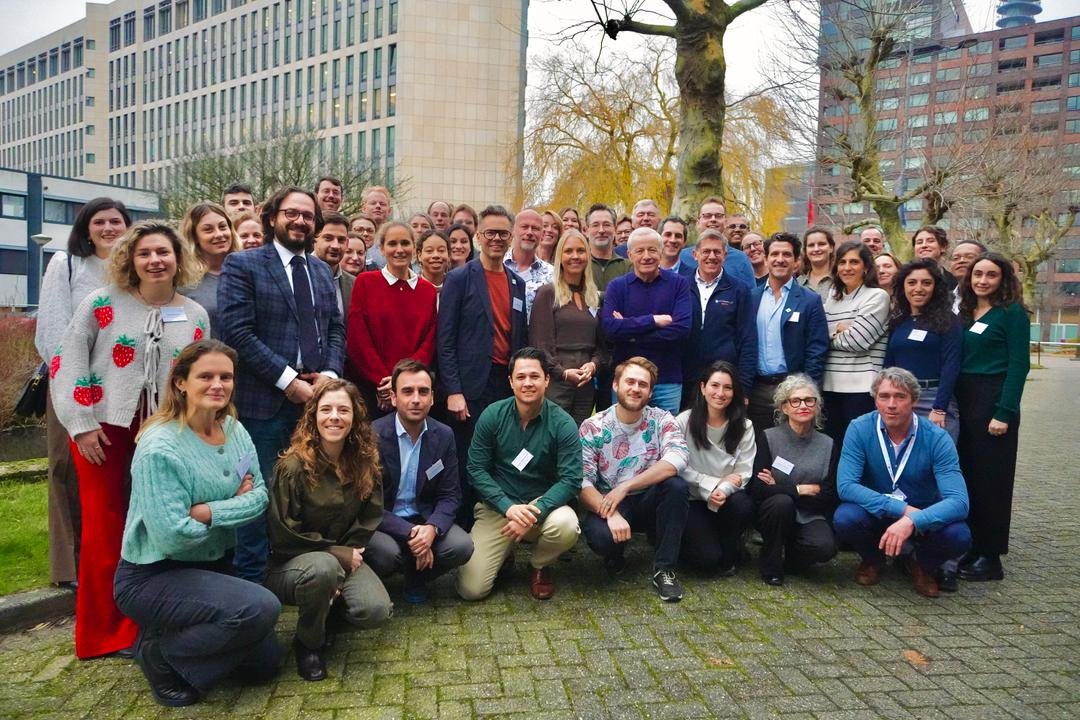
As INTERCEPT closes its first year, partners from across Europe and the United States gathered in Amsterdam, The Netherlands on 11th and 12th December for the 2025 Annual Meeting. The meeting was hosted by coordinating institution Amsterdam UMC. The agenda reflected not only the scientific and operational milestones of the past twelve months, but also the vibrant energy that defines this consortium. From the opening session it was clear that INTERCEPT is more than a research project. It is a community connected by purpose and driven by the shared belief that the future of Crohn’s disease can be transformed.
The meeting opened with an overview of the project’s progress, including updates on management work package achievements and communication activities and strategies. These sessions highlighted how much has been accomplished in a short period. The consortium has built a strong infrastructure supported by dedicated partners who approach every challenge with creativity and determination.
The second day brought the full breadth of the project into focus. Sessions explored major scientific updates across the work packages including discussions on biomarker progress and disease prediction strategies. These presentations illustrated how INTERCEPT is preparing to bridge the gap between discovery and real-world application.
Throughout the meeting the consortium demonstrated its collaborative spirit. Breakout sessions encouraged interactive discussions on recruitment strategies, operational challenges, family and patient perspectives, and laboratory implementation. These sessions brought together partners from clinical centers, data science, patient associations, and industry to collectively shape solutions and pathways forward. They served as a reminder that the strength of INTERCEPT lies in its diversity and its commitment to inclusive dialogue.
The meeting also provided important space to reflect on ethical considerations, regulatory interactions, and publication planning. These conversations ensured that progress in 2026 will be built on a foundation of clarity, shared ownership, and scientific responsibility.
As the meeting came to a close, the consortium looked ahead to 2026 with renewed motivation. Upcoming work on the PREDICT-CD study along with continued development of the clinical dashboard and health economics strategies signals a year of significant advancement. The community of partners, researchers, clinicians, data experts, and patient advocates left Amsterdam with a shared sense of direction and confidence.
The first year of INTERCEPT has shown what is possible when passion, knowledge, and collaboration come together. The achievements of 2025 reflect the dedication of the consortium, but they also mark the beginning of a larger journey. In 2026 INTERCEPT will continue to push boundaries, expand scientific understanding, and move ever closer to a future where Crohn’s disease can be detected early in the preclinical stage, potentially prevented, and fundamentally reimagined.
From all of us in the INTERCEPT consortium, we extend our appreciation to every partner who contributed to this year of progress. We look forward to the discoveries and collective successes that await in 2026.